NO REGRETS DESPITE HARDSHIP FOR REPATRIATED REFUGEE WOMAN IN KISMAYO
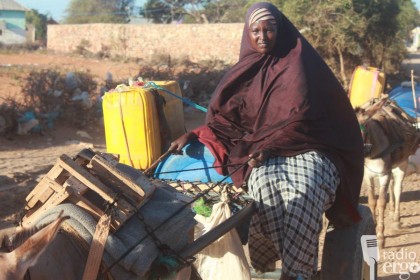
Since Sadiyo Omar Aden, 33, left the refugee camps in Kenya in January to return to southern Somalia, her life has become physically much harder. But she says she appreciates her new found independence.
Sadiyo spent eight years living in Dagahaley camp in the Dadaab refugee complex in north-eastern Kenya, where two of her seven children were born.
She and her husband decided to take the voluntary repatriation package from the refugee protection agency, UNHCR, and were transported back across the Somali border to the port city of Kismayo.
They knew nobody in Kismayo, however, where they have no house or property of their own. At first they stayed with a family they had met on the journey, before moving into a makeshift shelter they now call home. They originally come from Barawe, Lower Shabelle, where they still have a house, but they did not think it was safe enough to return there due to insecurity.
Hardship befell the family four months after arriving in Kismayo, when Sadiyo’s husband suddenly became blind. They did not go to a doctor to find out the cause. He has had to quit his work as a porter and part-time Koranic teacher.
Sadiyo stepped in as the family’s breadwinner, bought a donkey cart using part of their $500 repatriation cash, and is now supporting the family by selling water. Often it is back-breaking work lugging heavy jerry cans, especially as she is now three-months pregnant. Nevertheless, she declares she has no regrets about returning to Somalia.
“I have no intention of going back to Kenya, and if circumstances ever force us to move from here, I will go to another town in Somalia,” she said.
“I have now got used to the life in Kismayo and I am satisfied with the little I have. I am pleased to be here in my country, working for my children, instead of waiting for help from aid agencies.”
Sadiyo’s water selling business has not taken off as well as she had hoped. As many families now have access to tap water in Kismayo, it is hard to find customers and on the busiest days manages to sell only two barrels of water making a profit of around $4.
“On some days, I don’t get anyone to buy from me. I haven’t sold anything since yesterday!” she said.
The family’s three daughters aged between nine and 13 have all had to drop out of school because there is no money for school fees and none of the schools in Kismayo offers free tuition. They miss the free primary education they used to go to in the Kenyan refugee camp.
In order to boost her income, Sadiyo decided this month to send her eldest daughter Dahabo Abdinoor, 13, to work as a house maid for another family at an expected salary of 300,000 shillings (almost $14) a month.
Sadiyo said they made their decision to leave the refugee camps when food rations were cut from two to one distribution a month. Kenya also announced that the camps would be closed.
“We also felt that we couldn’t endure the pressure and all the rumours we were hearing about the camp closure so we just decided to come home,” she said.